0 items

CBG9: What exactly is this cannabinoid?
Reading time
⌛
5 min
“CBG9” is the name of a new molecule that has been making more and more noise since the ban on CBD derivatives from the Benzochromene group ; THCP, HHCPO and Other THCJD.
Cannabigerol-9 , its full name (not to be confused with CB9), is said to be a recently discovered natural secondary cannabinoid, described as "promising" and "innovative" by some sources. But what is the reality, and what exactly do scientific studies say?
What is CBG9?
According to most sources available in Google searches, Cannabigerol-9 is a minor cannabinoid synthesized naturally, like the 100 or 200 other cannabinoids produced by cannabis plants.
This CBG9 is said to be a byproduct of CBG, itself derived from its acidic form, CBGA. It is believed to produce effects similar to CBG, but in a more potent form. Sources vary, stating that it may or may not be psychoactive, and that it is capable of the following effects:
- Anti-inflammatory
- Antibacterial
- Analgesic
- Neuroprotective
For a complete overview of cannabigerol, please refer to our article: CBG: effects, benefits and uses.
Cannabigerol 9: What studies say
Most of the few items available on CBG9 invariably praise its success among researchers who see it as a very promising molecule. But this is where the problem lies, because most of them cite no specific studies. Very few do, and we were surprised to find no mention of this molecule in the sources.
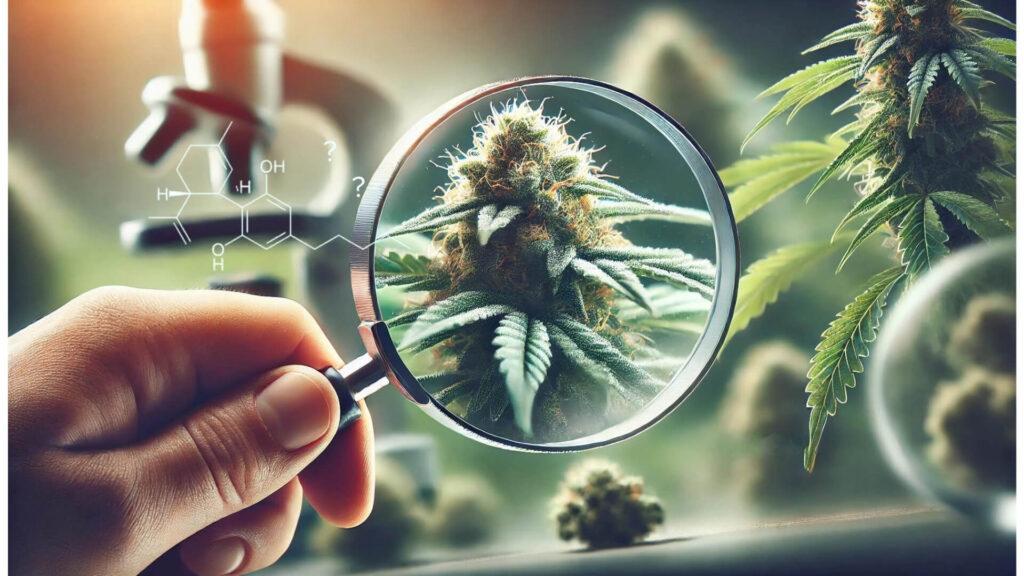
So we decided to search for these famous studies on "CBG9" ourselves and we had to face the facts: "Cannabigerol-9" does not exist. It is a brand name.
Since June and the ban on older derivatives, this type of product has proliferated rapidly. Here, you can find THM, which is a blend of minor cannabinoids, and THCN, which are CBD flowers infused in a high-concentration CBN isolate.
But the difference with CBG-9 is that the cannabinoid it's supposed to contain isn't actually there. So, what cannabinoid is actually present? How can you know what you're consuming?
What cannabinoid is really hidden under the name CBG9?
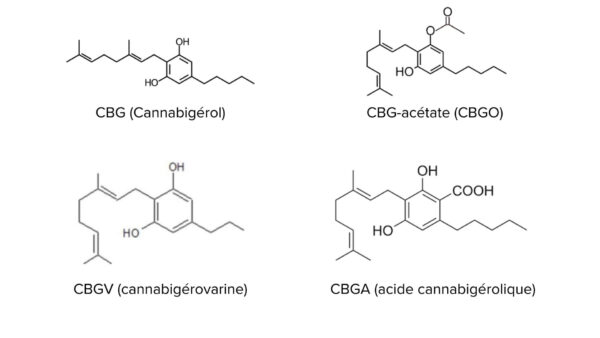
By cross-referencing the limited information available about the synthesis of CBG9 and its effects, we sought to deduce which cannabinoid was behind this name.
But even assuming that all products labeled CBG9 contained the same molecule, that this molecule was indeed derived from CBG and that the given characteristics were real, which is far from certain, the task was not simple as cannabinoids are similar in some respects.
Nevertheless, we were able to identify a rather short list of possible candidates for the position of "CBG9":
CBG acetate or (CBGO)
CBG acetate is a chemically modified version of CBG, just as HHCPO is for HHCP or THCPO for THCP. This modification is thought to affect how the molecule interacts with endocannabinoid receptors and therefore its effects.
There are very few studies that have looked into it. But according to them, it would retain the anti-inflammatory, antibacterial, and possibly antitumor properties of CBG with a prolonged duration and increased potency.
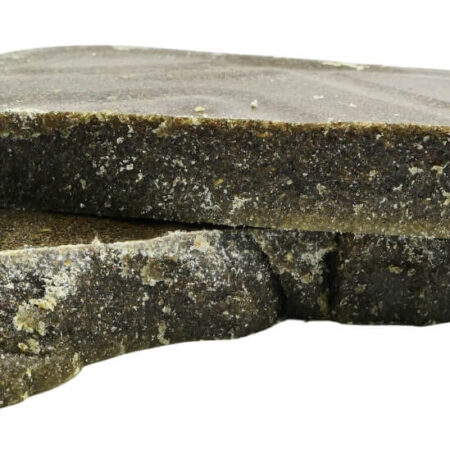
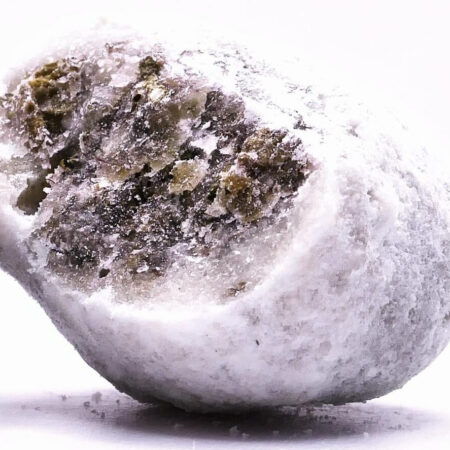
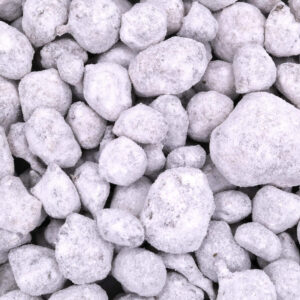
CBG-DMH (cannabigerol-dimethyl-heptyl)
CBG DMH is a synthetic form of CBG. As its name suggests, it is a CBG molecule to which two heptyl groups (a chain composed of carbon and hydrogen) have been added. This addition is said to make the molecule more stable and achieve greater bioavailability. It has been studied for its anti-inflammatory, antibacterial, and antitumor properties, as well as its lack of psychoactivity.
This addition of a heptyl group is not new; it forms the basis of several components found in the infamous Spyce blend (JWH-018, HU-210, AM-2201…). This psychoactive mixture, composed of dried herb, was banned worldwide in the 2000s, but CBG-DMH, being non-psychoactive, remains legal.
CBGA (cannabigerolic acid)
CBGA is the acidic form of CBG. It is the precursor molecule of CBG, as well as other cannabinoids such as THCA, CBDA, and CBCA, which are themselves precursors of THC, CBD, and CBC, respectively. CBGA has no psychoactive effect, but it is present in large quantities in fresh plants before they undergo decarboxylationboxdrying.
CBGA is said to have similar effects to CBD, sharing its antioxidant and anti-inflammatory effects.
CBGV (cannabigerovarine)
CBGV is a propyl derivative of CBG. That is to say, it has a shorter side chain, with three carbons, than classic CBG which has five.
It belongs to the class of "varine" cannabinoids, such as tethahydrocannabivarin (THCV) or cannabidivarin (CBDV). Its effects are less studied than those of CBG, but it appears to have similar properties, including anti-inflammatory and antibacterial effects.
HCBG
HCBG is a hydrogenated version of CBG, similar to H4CBD for CBD. The difference is that HCBG has never been discovered in its natural state; it is a chemical creation.
This additional hydrogen molecule is thought to alter the potency of CBG's effects, giving it a stronger and more stable structure that would allow for a stronger interaction with the endocannabinoid system. This would result in more potent and longer-lasting effects.
Legality and dangers of "CBDG9"
Obviously, without being able to clearly identify which cannabinoid is present under the name CBG9, we cannot be certain of the compound's legal status. We will have to rely on the seller's good faith.
But beyond the simple legal status of the compound, one of the major problems this poses is health-related, because we cannot be sure of our tolerance to a product that is unknown to us.
Our conclusion on cannabigerol-9
CBG9 is truly a very interesting cannabinoid. Not so much for its properties, whether real or supposed, but mainly because this cannabinoid alone could symbolize several problems facing the CBD world in France.
The fact that CBD in France was forcibly accepted by a decision of the European Council, but that it is not regulated by clear and precise legislation. The fact that some molecules are banned overnight, before being readmitted under certain conditions, "by obligation," like THCV. The fact that others are marketed under a more marketable, pseudonymous name without the actual molecule being mentioned, as was the case with the infamous "Delta-p," which was none other than THCP when it was still legal.
Perhaps one day these problems will be addressed and resolved, but in the meantime, always check the information provided by sellers if you want to be sure of what you're consuming. And if you enjoyed this article, feel free to browse our blog!