CBDOO at your service

Have a question? 06 70 73 89 02
🔞 Not for sale to under 18s
🔥 It's our anniversary: 30% off with the code 7YEARS!!! 🥳 ( excluding accessories and gummies)
Have a question? 06 70 73 89 02
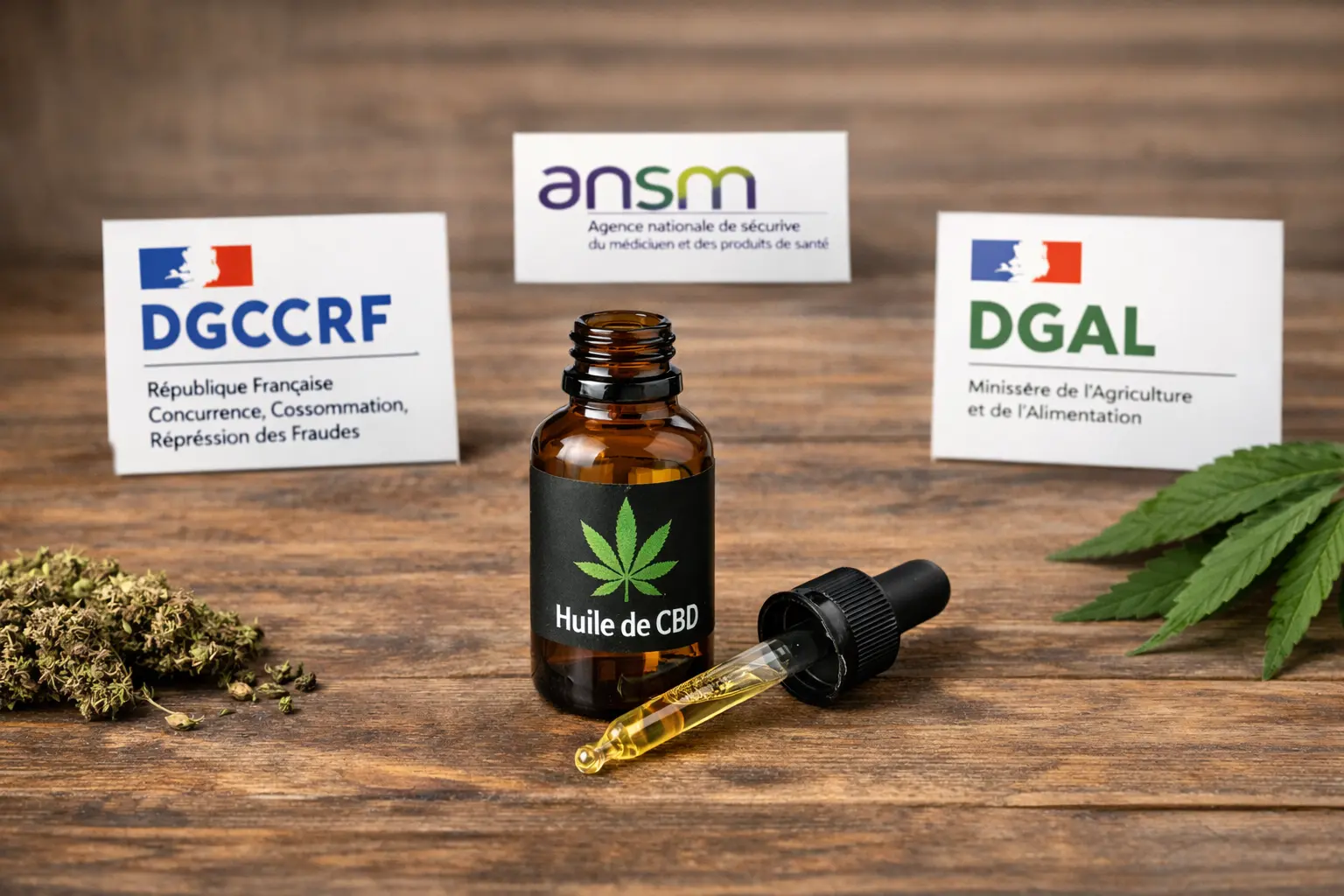
CBD oils are part of the CBD product range, for which demand is growing rapidly. Several manufacturers and retailers stand out by offering organic, cold-pressed, 100% natural oils...But these labels are governed by strict rules that are not always respected.
In this article, we will look at who sets the rules for the French CBD oil market, what these rules are, and we will give you some tips on how to easily distinguish between what is true and what is false.
When it comes to CBD oil, as with any other hemp-based product, the legal rules are defined by the French government and the European Union, notably through decrees, European regulations, and court decisions. But in practice, it is mainly the regulatory authorities that interpret and enforce these rules on the ground.
Among the organizations most active in the CBD are:
This explains why CBD regulations are so changeable: they are largely based on administrative interpretations, investigations, and subsequent health recommendations, rather than on strict, fixed texts.
To date, in France, no legislation explicitly sets a limit on the concentration of CBD in oils. However, the recommendations on the permitted daily dose, applied by the DGCCRF and the DGAL, are likely to restrict the maximum percentage in oils.
These organizations rely on internal recommendations to limit the recommended daily dose to approximately 50 mg of CBD per day, mainly to avoid the risk of drug interactions.
For example, one drop of oil containing 30% CBD contains approximately 15 mg of CBD. Three drops of this oil would be close to the recommended limit.
In this context, highly concentrated oils are not illegal per se. Nevertheless, a consensus has formed among suppliers, most of whom no longer produce oils exceeding 30% in order to avoid any embarrassment in the event of an inspection by the authorities.
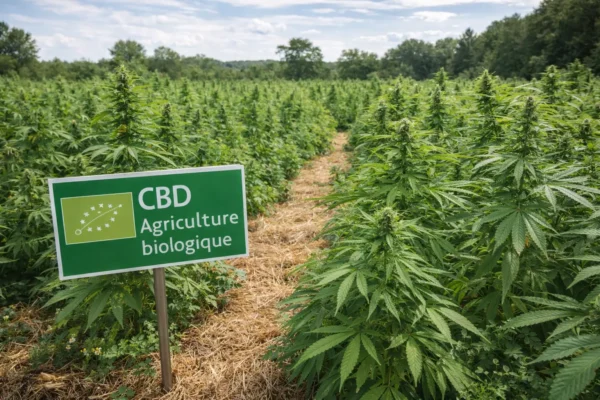
The organic rules for CBD oils are the same as for all other food products: they are very strict and regulated at the European level. According to the Department of Economic Affairs: "for processed products, at least 95% of the ingredients must come from organic farming."
In addition, CBD oils are most often produced by macerating hemp in carrier oil. This technique allows for certification, but its yield is rather low and the concentrations obtained rarely exceed 4 or 5%, which explains why these oils are generally much more expensive.
Conversely, highly concentrated oils (20% or 30%) are generally obtained through more complex extraction processes. Although they may be composed of a blend of organic ingredients, they rarely meet the criteria for official organic certification.
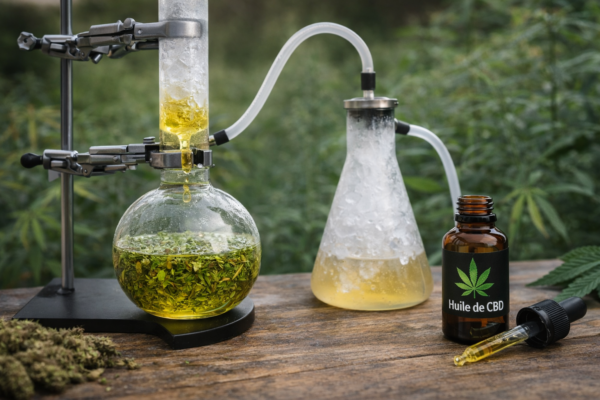
The term "cold extraction" is widely promoted in the CBD market. In the world of vegetable oils and olive oil, this designation is a true marker of quality, as it refers to processes that preserve heat-sensitive compounds.
In the CBD industry, many consumers naturally make this connection. However, unlike edible oils, the term "cold extraction" is not strictly regulated for CBD oils, which can lead to confusion.
In practice, two methods best correspond to the idea of gentle extraction without degrading the active compounds:
Conversely, some oils labeled as "cold-pressed" are actually cold-pressed carrier oils to which CBD extract obtained by another process has been added. This practice is perfectly legal, but it does not always meet the requirements of naturalness and minimal processing that consumers seek when they talk about cold extraction.
In summary, for a CBD oil that is truly consistent with the idea of gentle extraction, it is essential to consider not only the carrier oil, but also the CBD extraction process itself.
Here are our tips to help you choose a high-quality CBD oil, whether it's organic or cold-pressed. When you look at a product description, check these points:
In general, a high-quality oil is above all an oil that is transparent about its manufacturing process and composition, rather than an oil that makes excessive promises.

Social anxiety disorder can affect anyone. The manifestations of this phenomenon are numerous. Among them, for example, is the fear of being judged or rejected by others. The fear provoked by anxiety can cause some people to shut down in order to avoid certain everyday situations. Social anxiety [...]
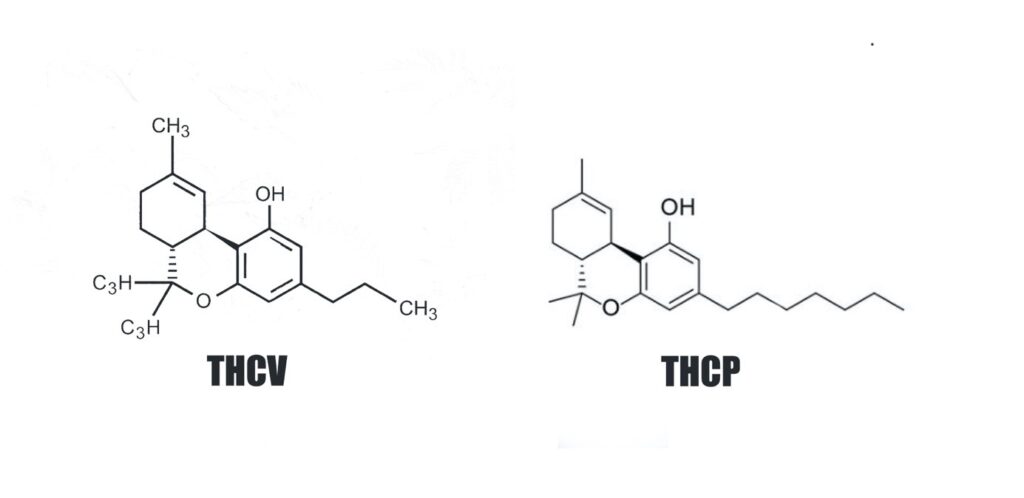
In addition to H4CBD, two other molecules will be available on the French and European markets in 2023: THCV and THCP. These are two of the many cannabinoids present in cannabis. As you probably know, alongside the two best-known and most concentrated compounds, THC and CBD, there are [...].
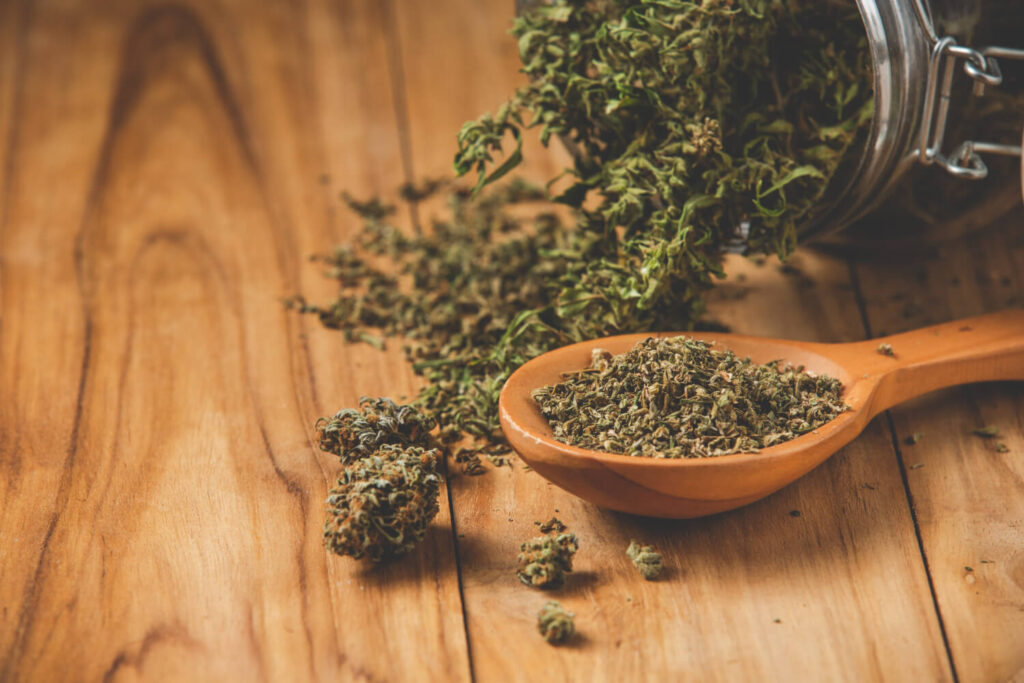
It's one of the flagship products of many CBD shops: CBD trim. This term, which is fairly new in France, is gaining momentum with the development of the CBD industry following its legal commercialization in 2018. It's an Anglicism, so it's a neutral term that can be used as a [...].