0 items

10-OH-HHC: Legal status, effects and risks in 2026
Reading time
⌛
5 min
On May 29, 2024, the ANSM (French National Agency for Medicines and Health Products Safety) announced the classification of CBD derivatives then on the market (THCP, H4CBD, HHCPO…) on the list of narcotics. No sooner said than done, but immediately banned and immediately replaced.
Less than two weeks after the ban took effect, new CBD derivatives emerged circumventing the ban.
Today, we're introducing you to one of them, 10-OH-HHC. As you've probably guessed, it's a cousin of HHC. You're likely wondering how it's possible to be legal? Or what its characteristics are?
Follow the guide, we continue our tour introducing cannabinoids!
Discover our 10-OH-HHC products
Is 10-OH-HHC legal?
After its commercialization, 10-OH HHC became ubiquitous in CBD shops, but two years later it has become much rarer, although some shops continue to offer it. As of May 2026, it is still not explicitly prohibited in France and most EU countries. The ANSM decree of January 16, 2026, which strengthened the classification of HHC in Annex III, did not extend this classification to its metabolites such as 10-OH-HHC and 8-OH-HHC. The molecule therefore remains in a legal gray area: it is neither explicitly prohibited nor explicitly authorized. 10-OH-HHC is thus still in this gray area, legal because it has not been officially banned.
10 OH HHC: what is it?
10-OH-HHC is not exactly what one would call a cannabinoid. It is a metabolite of HHC, like 8-OH-HHC; it is one of the possible results of the oxidation of HHC by cytochrome P450 enzymes found in the liver.
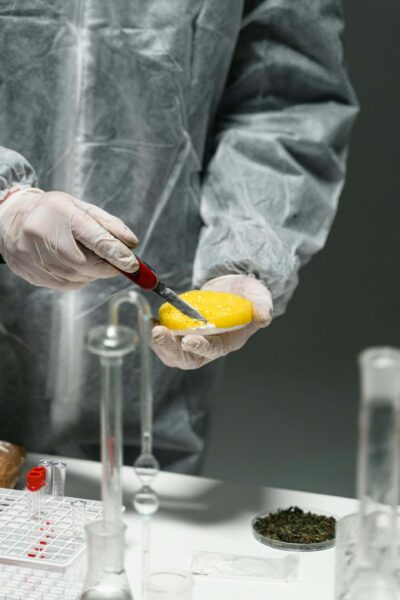
In other words, it is one of the molecules created by the body after consuming HHC. In isolate form, it appears as a syrupy yellow liquid resembling honey.
A quick reminder about HHC
HHC , a relative of 10OH HHC, was discovered in 1944 by Roger Adam. It is a hydrogenated form of THC, which is present in minute quantities naturally in cannabis.
In France, HHC paved the way for a market for CBD derivatives. It was legal for a time before being classified as a narcotic. Then an acetylated and hydrogenated form appeared: HHCPO. This also gained some notoriety before being banned.
The effects of 10 OH HHC
Very little is known about the compound because there is very little research on it. Most of the information we have today comes from the two studies mentioned above and consumer reviews.
What we do know is that 10-OH HHC is not very stable. It has low bioavailability (only a small percentage of the consumed product is processed by the body) and a short half-life in the body. This means that its effects quickly lose more than half of their activity in the body.
According to available studies, this compound appears to have a strong influence on CB1 and CB2 receptors, resulting in psychoactive activity quite similar to that of HHC but with a shorter duration.
User feedback seems to confirm the results described in these studies. They describe sensations quite similar to those of hhc, namely:
- Altered perception (psychotropic effects)
- A feeling of relaxation and euphoria
- Appetite stimulation
They also report a faster and shorter duration of action than HHC.
The risks associated with consuming 10-oh-hhc
Regarding both risks and effects, it is difficult to make a definitive statement given the limited data available. Because this compound is naturally present in the body, some might assume it has a better safety profile than other compounds such as HHC or HHCPO.
But it should not be forgotten that, like all CBD derivatives, 10-OH-HHC has a psychoactive effect, whether natural or not, its consumption carries a degree of risk.
Several users have reported side effects very similar to those of THC, including:
- Increased heart rate
- Coordination problems
- Dry mouth
- Red eyes
- Reduced responsiveness
- Short- and long-term memory loss
- Drug interactions
- Nausea or a feeling of hunger
- Headaches
- Fatigue and drowsiness
Discovery, history and creation
The discovery ofHydroxy-hexahydrocannabinol (10-OH-HHC) , or 10-hydroxy hexahydrocannabinol, is relatively recent, dating back to 1980. It was made by the team led by Raphaël Méchouam at the Israel Institute for Biological Research. This initial discovery is one of only two known studies on this compound.
After successfully synthesizing THC, researchers managed to synthesize 10-oh-HHC and studied its effects on rhesus monkeys. They demonstrated that the compound produced psychoactive effects at doses as low as 0.5 mg/kg.
Although it was synthesized and studied in the 1980s, 10-OH-HHC was not fully isolated until 2015 by a group of researchers at the University of Mississippi under the direction of Professor A. Ahmed. This research, which aimed to test the antimicrobial activity of hydrogenated compounds of HHC, concluded that 10-OH-HHC had moderate antimicrobial activity, including against methicillin-resistant Staphylococcus aureus, Leishmania donovani, and various strains of Plasmodium falciparum.
To obtain 10-OH HHC, lab technicians must first create HHC by hydrogenating the product of CBD terpene coagulation. In simplified terms, this involves reacting a CBD molecule with a terpene to create THC. Next, the THC is hydrogenated to produce HHC. Finally, the HHC is oxidized by adding 10 groups of oxygen atoms bonded to hydrogen atoms, known as hydroxyl groups (OH). This is how 10-OH HHC is formed.
Conclusion
As we assumed in the conclusion of our article on the ban on CBD derivatives announced on May 29, 2024, this decision, intended to protect the consumer, only prolongs the cat-and-mouse game that we are seeing in the world of CBD.
Two years after its introduction, 10-OH-HHC has still not been classified in France. While some publications mistakenly present it as prohibited, the ANSM decree of January 16, 2026, demonstrates the opposite: it classifies HHC but does not classify its metabolites. This does not mean that the situation is permanent, and we will continue to monitor developments.
We hope you enjoyed this article and that it shed some light on this new compound. If so, feel free to check out our blog to learn more about the ever-evolving world of CBD!
Sources
- [1]
- [2]
- [3]
FAQ
Is 10-OH-HHC banned in France? Does 10-OH-HHC show up in saliva tests? (strong intent among drivers) What are the effects of 10-OH-HHC?
No, as of May 30, 2026, 10-OH-HHC is not classified as a narcotic in France. The ANSM decree of January 16, 2026, strengthened the classification of HHC, but did not extend this classification to its metabolites such as 10-OH-HHC. The molecule remains in a legal gray area: it is still legal until it is banned.
Does 10-OH-HHC appear in saliva tests?
Does 10-OH-HHC show up in saliva tests? 10-OH-HHC itself is not targeted by roadside saliva tests, which screen for THC. However, flowers and resins containing 10-OH-HHC contain up to 0.3% of the legal THC content: this presence can befire to trigger a positive test. Driving after consumption is therefore strongly discouraged, as the legal risk is real.
What are the effects of 10-OH-HHC?
10-OH-HHC produces psychoactive effects similar to those of HHC: altered perception, feelings of relaxation and euphoria, and appetite stimulation. Its effects are generally described as appearing more rapidly but lasting longer than those of HHC.
Is 10-OH-HHC dangerous?
10-OH-HHC is poorly studied at present, its danger is not proven but users have reported adverse effects such as: increased heart rate, coordination problems, reduced reactivity, short and long term memory loss or drug interactions.