0 items

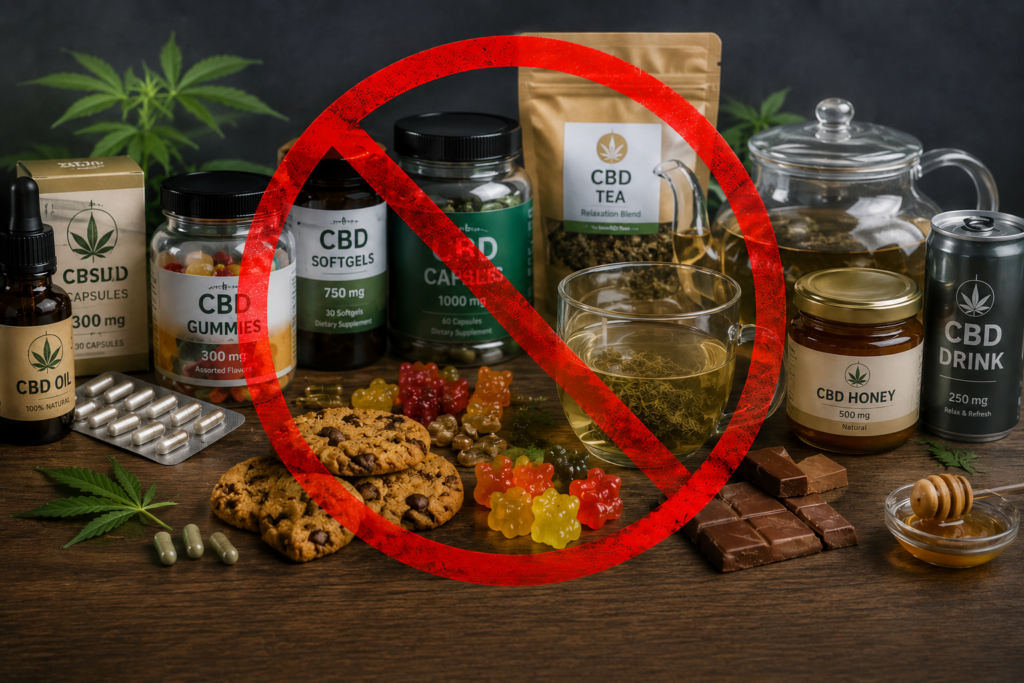
Gummies, cookies, oils, CBD capsules: the end of edibles scheduled for May?
Reading time
⌛
3 min
The French Directorate General for Food (DGAL) has set its sights on cannabinoid-based edibles (CBD and THC), which will be banned from mid-May 2026.However, this is not a new law or decree. Indeed, no formal announcement has been made, as this decision actually involves a tightening of the enforcement of a decree already published in 2018.
Why this tightening of restrictions, is the decision firm and final, and which products are affected? We answer all these questions.
The starting point: a European impetus
Unlike the authorization to sell CBD flowers and resins, which was validated in France by a European decision, this time it was the European authorities who gave the impetus for this tightening.
The European Food Safety Authority has published a highly anticipated update to its assessment of CBD as a novel food. The verdict is severe: based on the various data collected on the toxicology of CBD, the European authority sets the provisional safety limit at 0.0275 mg per kg of body weight per day, or approximately 2 mg of CBD per day for a 70 kg adult.
By comparison, commercially available products regularly contain doses ranging from 10 to 50 mg per unit. At this dose, the absence of risk cannot be guaranteed for individuals under 25, pregnant or breastfeeding women, and those taking medication.
Concerns among French health agencies
In parallel with this European publication, the agencies in charge of novel foods from a public health point of view, ANSM and ANSES, were already concerned in the summer of 2025 about an increase in nutrivigilance cases related to products containing CBD.
These products had often been recalled because it turned out that they did not comply with the legislation: they contained a THC level exceeding 0.3%.
As a reminder, it was a similar case, the poisoning of a teenager who had consumed H4CBD gummies, which was used as a banner in the press to relay the ban on this molecule in 2024.

The lack of scientific data on novel foods
Since 2019, the novel food market has expanded considerably. Capsules, drinks, oils, and all kinds of foods containing CBD are everywhere. However, these products have never been formally authorized. In fact, they only received approval in principle, pending proof from their manufacturers of their safety.
And that's precisely where the problem lies. Since 2019, more than 150 applications for authorization of CBD-based ingredients have been submitted to the European Commission. None of them have been completed by the manufacturers.
France decides to end tolerance
Ultimately, the authorization of foods containing cannabinoids was never truly validated, but only provisionally approved. Faced with a lack of data, the inability of manufacturers to demonstrate their safety, the increase in cases of poisoning, and the new unfavorable opinion from the European Food Safety Authority, the French authorities decided to terminate this provisional approval.
What does this regulation apply to?
The regulation of the DGAL plan has a very precise scope, defined by 4 criteria.
Products intended for ingestion : With regard to novel foods, only products intended for ingestion are concerned. These include:
- Oils, capsules, softgels
- Sweets, cookies, honey…
- Drinks
- Herbal teas and infusions containing flowering tops
This regulation applies to products intended for both humans and animals.
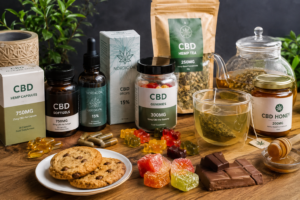
Products containing cannabinoids : all products that contain cannabinoids, whether natural or synthetic.
All products claiming the presence of cannabinoids : whether on the label, on the product sheet or on the packaging, as soon as the mention "CBD" or "THC" appears.
To all distributors on French soil : whether small retailers, supermarkets or pharmacies, any seller who puts a product on sale in France is concerned in the same way.
Products not covered by this plan
The DGAL plan is a food plan. It does not cover:
- CBD flowers and resins sold for non- usafood
- CBD cosmetics
- Vaping products : e-liquids, puffs…
- Synthetic derivatives remain legal as long as they are not incorporated into a food product.
Never again Novel Food in France?
In France, the regulation on novel foods is simple: no food ingredient unknown in the European Union before May 15, 1997, can be placed on the market without prior authorization. This authorization must be based on a scientific evaluation and expressly validated.
Nevertheless, the plan remains questionable on several points, and the French position could conflict with the principle of free movement of goods in the European Union, as was already the case for flowers and resins at the beginning of their marketing in 2018. If Germany, Italy or the Czech Republic continue to authorize certain products, European operators will be able to challenge the French banbefore the CJEU.
In short, the ban will indeed take place from mid-May, but it is not definitive: the legal appeals that will surely take place, as well as the collective mobilization called for by several actors in the field, may change the delimitation and/or the areas of application of the text a posteriori.