0 items

CBD and weight loss

Reading time
⌛
3 min
According to the WHO, 39% of adults worldwide are overweight and 13% are obese, making overweight and obesity the fifth leading cause of death worldwide (along with diabetes, cancer, and related heart problems)1].
Understanding weight gain
Weight gain and metabolism
Weight gain is linked to metabolism, which is the way the body uses energy through a series of chemical reactions occurring in the body's cells.
Science distinguishes between active metabolism and basal metabolism. Minimum energy requirements depend on several factors: weight, height, sex, age, and thyroid activity. They generally fall within a range of 1200 to 2000 calories per day, obtained from food and converted into energy by the body. Excess calories will be stored and must be eliminated through physical activity [2].
A healthy diet and exercise contribute to a good metabolism. However, in practice, metabolisms differ from one individual to another, with some metabolisms requiring more or fewer calories to function. Therefore, there is a degree of inequality in how people experience weight gain. Thus, while some individuals will be subject to a strict diet and exercise regimen, others can eat whatever they want without gaining an ounce!
Can you lose weight with CBD?
The role of the endocannabinoid system
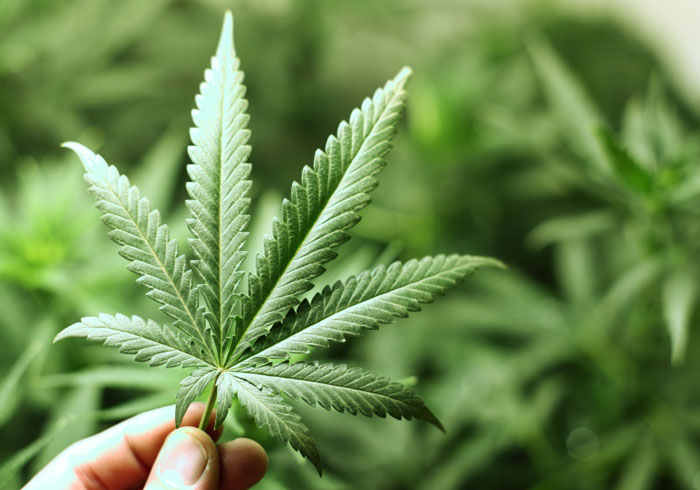
CBD is a molecule derived from the hemp plant, alongside THC, but it does not produce any psychoactive effects. CBD acts on the endocannabinoid system. This system, found in all vertebrates (ECS for short), is composed of CB1 receptors located in the central nervous system, CB2 receptors found throughout the rest of the body, and metabolic enzymes. This system plays a significant role in managing pain, inflammation, and the circadian rhythm. Because of this, CBD can be beneficial in a wide range of cases : to relieve endometriosis and menstrual pain, to regulate inflammation due to Lyme disease, and to stabilize blood sugar levels in certain types of diabetes.
Metabolic enzymes play a role in many physiological functions of the body, particularly in energy storage and nutrient transport.


CBD and weight loss: clinical studies
Several scientific studies have examined the role of CBD in weight loss:
Let us first cite a study carried out in 2016 by a group of Korean researchers from the biotechnology department of Daegu University [3], which states in its conclusions that CBD is a promising molecule for the prevention of obesity.
There are two types of body fat: white and brown
- White fat (which is more abundant) tends to disrupt our metabolism by accumulating. White adipose tissue is the result of excess calorie storage.
- Brown fats that help burn calories faster to produce heat.
Activating these brown fats helps reduce the risk of obesity and also diabetes4].
The data from this study suggest that CBD plays a dual role. It has a regulatory role by converting white fat into brown fat, and it also stimulates metabolism to facilitate the breakdown of lipids.
A review of several clinical studies on CBD published in 2017 [5] mentions one clinical study. This study, conducted on animals over 14 days with CBD dosages of 2.5 mg/kg and 5 mg/kg, observed weight loss in the subjects , but more importantly, a 25% decrease in cholesterol levels (overweight individuals generally have higher cholesterol levels than individuals of normal weight [6]).
Next, a preliminary 2008 study [7] examined the role of the endocannabinoid system, specifically CB1 and CB2 receptors, in regulating inflammation, cardiovascular risk, and metabolism. It demonstrated that the ECS naturally stimulates these receptors, and therefore metabolism, to facilitate digestion and calorie burning. Similarly, several studies link obesity to overstimulation of CB1 receptors, causing their dispersal from the central nervous system to adipose tissue, and they demonstrate that CBD may block the enzymes that activate these CB1 receptors [8].
Similarly, oxidative stress (damage to cellular components, particularly by free radicals) and inflammation (obesity is an inflammatory disease) play a role in weight gain. According to a 2012 study [9], CBD, by directly impacting the ECS, may have benefits in reducing stress and anxiety as well as inflammation, and therefore significant therapeutic benefits for metabolism [10].
CBD, or any other supplement or medication, is not a treatment for obesity. It is not a substitute for a healthy diet and regular exercise. A person who adds CBD to their weight loss plan without exercising or eating healthily may not see any benefit.
Sources
- [1]
- [2]
- [3]
- [4]
- [5]
- [6]
- [7]
- [8]
- [9]
- [10]