0 items
view cart

CBD, endometriosis and painful periods
Reading time
⌛
3 min
Before understanding theimpact of cannabidiol (CBD) on the pathologies of endometriosis and menstrual pain, a few definitions are in order:
What is endometriosis?
Endometriosis is a chronic, generally recurrent disease that affects between 6% and 10% of women. The endometrium is the lining of the uterus. When this mucous membrane develops elsewhere, migrating abnormally towards the fallopian tubes, cervix, ligaments, ovaries, peritoneum or even towards non-genital organs such as the bladder, colon (...), we speak of several cases of endometriosis.
Despite the fact that the endometrium develops elsewhere than in the uterus, which is its normal place, it will follow the hormonal logic of the 28-day cycle and disintegrate, causing blood flow.
Causes of endometriosis
Endometriosis can have many causes. A history of gynaecological surgery, early and painful menstruation with short cycles or in utero exposure to diethylstilbestrol[1] are all plausible explanations.
Symptoms include heavy periods around the third day of the cycle and constant pain. Several medical examinations, including ultrasound, MRI and other radiology techniques, can be used to diagnose this condition.
Although it generally disappears at menopause[2], medical treatments are often sufficient to regulate the disease, but endometriosis retains a psychological impact due to the pain. Alternative medicine and a healthy lifestyle can provide relief. In this context, we will see below that the use of CBD oil can help relieve pain and the harmful effects of the disease.
Painful periods / menstrual pain or dysmenorrhea :
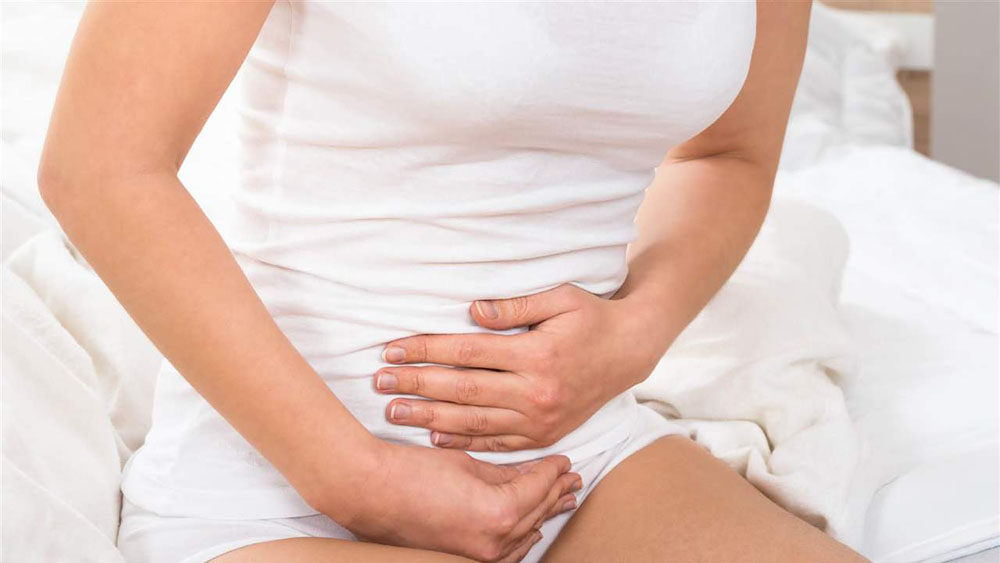
Menstrual pain affects 50-80% of fertile women. Of these, 5 to 15% of women have to change their daily routine during the 2 or 3 days of intense pain. In general, this period is particularly painful during adolescence and just before menopause, due to the greater hormonal variations[3].
These pains are explained by uterine contractions linked to the cessation of estrogen and progesterone production after ovulation and in the absence of fertilization. In fact, the endometrium produces too many prostaglandins, which are responsible for these painful uterine contractions[4], sometimes reaching other organs and causing nausea, diarrhoea or headaches[5].
Cases of primary dysmenorrhoea are also often linked to inflammation, the causes of which are not yet well understood, due to a lack of medical research in the field[6].
Similarly, traditional treatments such as the contraceptive pill or ibuprofen do not work in all cases.
Benefits of CBD intake for patients:
Dr John Thiel, Provincial Head of the Department of Obstetrics and Gynaecology at the University of Saskatchewan in Regina, Canada, suggests the existence of cannabinoid receptors in the female genital tract. By directly interfering with these receptors, which reduce pelvic pain, CBD would play a positive role in pain management[7]. One scientific study of 134 patients suffering from chronic pelvic pain who took CBD concluded that it had a positive effect in 60% of cases.
In the specific case of endometriosis, when the endometrium outside the uterus causes bleeding, this releases inflammatory mediators responsible for pain and syndromes such as irritable bowel syndrome and fibromyalgia. So CBD, with its potential anti-inflammatory properties, would work where traditional treatments don't [8].
Studies have also shown that CBD acts directly on the nervous and inflammatory systems, resulting in reduced pain. The Foria laboratory has created CBD-based vaginal ovules to soothe pain, and the Swiss association S-Endo recommends CBD when traditional drug treatments don't work.
However, as a precautionary measure, the Canadian Medical Association (CMA) does not recommend CBD use for pregnant women.
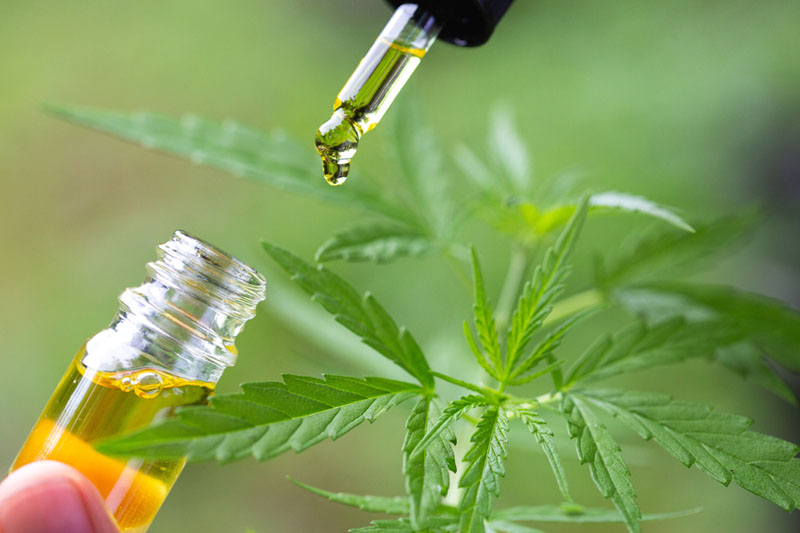
One of the most effective ways to take CBD is in oil form.
How to take CBD oil
Simply choose your CBD oil and take a few tastes of CBD oil directly under the tongue, for rapid diffusion into the bloodstream[9]. Although there's no danger of overdosing with CBD, we advise you to start with the lowest dose of CBD, as each person reacts differently to the substance, and then gradually increase the dose until you feel relief.
Sources
-
[1]
www.endofrance.org/la-maladie-endometriose/qu-est-ce-que-l-endometriose www.doctissimo.fr
- [2]
- [3]
- [4]
- [5]
- [6]
- [7]